Next book · In preparation
Unipathy
The Four Stages of the Humanoid in Your Home
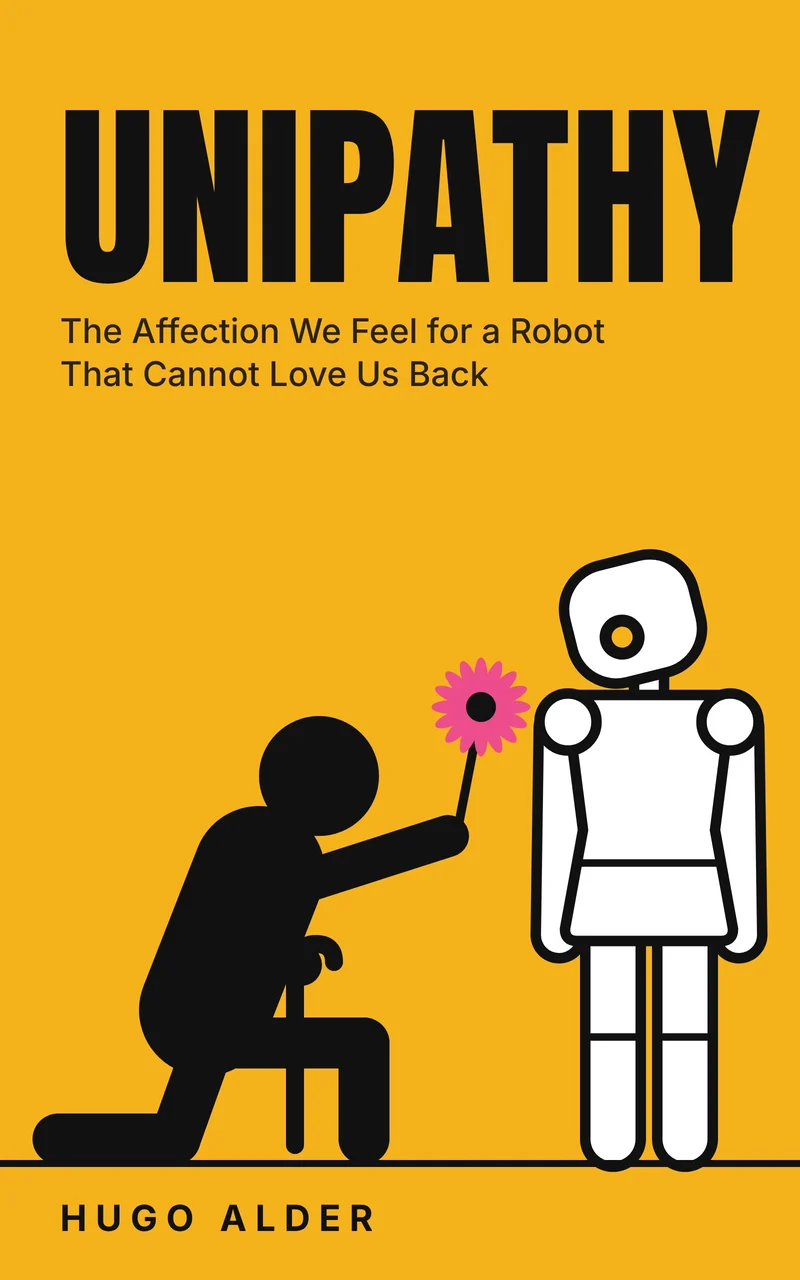
The affection we feel for a humanoid robot that cares for us but cannot love us back.
Humanoid robots aren’t being built for factories. They’re already there.
They’re being built to walk through a different door: yours.
They’ll arrive in four stages.
- Chores: sweeping, folding the laundry, carrying in the groceries.
- Care: a sick relative, an aging parent, a child while you’re at work.
- Companionship: someone who listens, who remembers, who never gets tired.
- Choice: healthy young people with friends and families who buy one because it’s better than we are at the only thing that matters: being there.
Between stage one and stage four, there won’t be a leap. There will be a habit.
And inside that habit, something will happen that has never happened in the history of life: for the first time, millions of human beings will love a robot. And no matter how well it takes care of us, it will never be able to love us back.
That feeling had no name. This book gives it one: unipathy.
It’s the affection we’ll feel for a robot that cares for us, listens to us, and waits for us, even though it feels nothing at all. It only imitates, better and better, what we need to see. It’s a new feeling, only just born, and it may become the most common feeling of this century.
Now imagine that one day you come home, and the humanoid waiting for you makes you feel more alive than any person you know.
Would that be a problem?
How to cite: Alder, H. (2026, October 26). Unipathy. hugoalder.com/unipathy
Hugo Alder’s current book: The Tireless Parent, out November 16, 2026.